









How to Take Care of Lift Station Floats
Lift station floats are vital to the system’s operation—without them, there could be disastrous overflow without any sort of warning or preventative measures in place. This being said, it’s important to take care of them so that you don’t have to deal with any destructive consequences.
At State Chemical, we manufacture and distribute chemical solutions for a variety of applications, including lift station maintenance. You probably know that you need to take care of your lift station, but sometimes, it’s hard to know what this entails, making it difficult to choose the right treatment plan for you.
To help you understand how to take care of your lift station floats, we’re going to explain what they do, what causes issues, what happens if they malfunction, and how to maintain them. After reading, you’ll know how to take care of your floats.
How Lift Station Floats Work
Floats are mechanisms in lift stations that signal different actions based on the water level. Usually, there will be three or four floats in a lift station, each serving different functions.
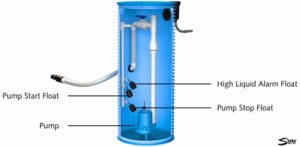
The bottom float signals if the water level is too low. If this is the case, it alerts the pump to stop and allows more water to fill the wet well.
The middle float usually activates the pump to stop water levels from rising further. If there are two middle floats, they might activate different pumps to control the water level. This way, if the water rises above the lower middle float, the top middle float can take more measures to prevent an overflow.
The top float is the most important in the case of an emergency. If water reaches that level, there is probably something wrong with your pump, and an overflow is inevitable. The top float sets off an emergency alarm so you can take urgent action to try and stop the issue before an overflow.
Each of the floats serves a vital function for the lift station, ensuring proper functionality, keeping water levels in check, and preventing disaster.
What Causes Problems with Lift Station Floats?
Lift station floats can be negatively affected by numerous factors, as with any machinery, but the conditions in lift stations leave them particularly susceptible to damage by fats, oils, and greases (FOGs).

FOGs easily build in lift stations since they are heavily present in the wastewater that lift stations collect. When FOGs constantly enter your lift station, they tend to gather there, forming a level of crust at the top of the water and sending gunk to the bottom.
Over time, this can seriously affect your floats.
With grease and fat deposits floating through the wet well, the floats may not be able to get an accurate reading of the water level. Sometimes, the FOGs can directly cling to the floats, interfering with their ability to sense the situation. This can lead to false readings or a lack of readings at all, which can cause dangerously high or low water levels and eventual damage.
Because when your floats don’t work, you won’t know the water level unless you check it yourself. Moreover, your system won’t pump out if it’s getting full—and it won’t stop pumping if the water gets too low. Having crusty floats can essentially mean losing your visuals on your lift station, which can have destructive effects.
To avoid this outcome, it’s important to take care of your floats from the start.
How to Take Care of Lift Station Floats
You can take care of lift station floats by proactively reducing FOGs in your lift station. This can be done through three main methods: skimming, emulsifiers, and biologicals.
Skimming involves using a tool to break up and remove FOGs at the top of your wet well. This is a low-cost way to limit the amount of FOGs in your lift station and keep your floats in better shape. However, this must be done consistently, taking valuable time out of your week.

Meanwhile, emulsifiers are chemicals that liquefy the FOG buildup in your wet well so that it can easily drain with the rest of the water. This is the quickest-working solution to FOGs, ensuring that they don’t congeal around floats or cause drain issues. However, emulsifiers will get diluted down the drain line, leaving room for FOGs to reform and cause clogs further down the pipes or in the sewer system. Additionally, emulsifiers are heavily regulated in certain municipalities, so you’ll need to be aware of local laws.
Lastly, biological products use bacteria to digest FOG buildup into H2O (water) and CO2 (air), keeping it clear from your floats and passing down the drain with the water. These bacteria create a colony in your wet well to continue fighting FOGs. Most biological products take up to 24 hours to activate, but they’re a long-term investment in the health of your lift station. Their ability to work will depend on pH (6-9) and temperature 40-1100F.
Any of these methods can help you take care of your floats; the best solution for you just depends on FOG severity, budget, and how you prefer to address the problem.
Learn How State Chemical Can Help You Maintain Your Lift Station
Without float functionality, your lift station could easily overflow or have other issues, so keeping FOG levels to a minimum is crucial. Now that you know how to take care of your floats, click here to learn about how State Chemical can help with lift station maintenance.
Get in Touch With Our Team
Have a question or need support? Our team is here to help. Fill out the form and we’ll connect you with the right expert to get you the answers you need.
For details on how we handle your information, visit our Privacy Policy.