









Understanding Care for Your Hospital Drain Systems and Lift Stations
In a place dedicated to restoring health, taking care of the environment is extremely important.

A hospital without a proactive approach to drain care can face consequences and spend additional time tracking down problems. Implementing maintenance solutions ahead of time in your drains and lift stations helps prevent recurring complaints and emergencies.
In this article, we will highlight key problem areas and solutions, including:
- Slow Drains
- Recurring Odor Complaints
- Effects on the Patients and Employees
Whether the issues are in the operating room or lift stations, prolonged smells or slow drains will leave your patients and employees struggling to feel comfortable in the environment.
Leaving Maintenance Issues Untreated
Before diving into applications and addressing the issues proactively, it’s essential to understand the long-term issues that can create an uncomfortable environment. When a facility experiences persistent odor or hygiene issues for an extended period, it affects the atmosphere for both employees and patients.

Many of your common maintenance headaches are tied to how well your facility can distribute patient care. Slow drains causing backups in inpatient showers or bathrooms can be a cause for complaint. If your lift station is near intake or loading docks, odors can migrate and become a front-door experience problem. How your patients perceive your facility directly correlates with their comfort and ease in their recovery.
When drain care and lift station maintenance are ignored, the first visible symptom is usually odor, but the real cost shows up as room closures, disrupted workflows, and patient-care delays.
Drain Maintenance: Staying Proactive
Slow drains that emit unpleasant odors and create a risk for drain flies have no place slowing down a work environment meant to support patients who are healing. Addressing and understanding the issues upfront will save you from emergencies and keep your plan strictly for maintenance.
Slow Drains
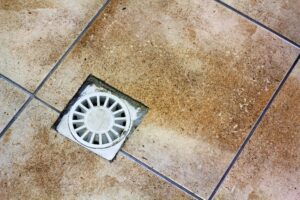
A slow drain is any drain where water pools, causes gurgling, odor, or frequently requires snaking. Slow drains are warning lights, indicating that a more expensive or time-consuming fix could be on the rise.
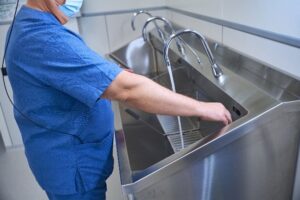
Drains clog and slow down due to a few different scenarios. In spaces such as an operating room or dialysis center, biofilm can build up on the interior walls of your pipes and act like Velcro, catching everything that passes. Fats, oils, and greases (FOGs) can create sticky paste-like substances that settle on your pipes once cooled. Inorganic fibers settle at low points and elbows of your drain system.
Consider implementing a drain maintainer such as PrimeZyme™ and a spot treatment like Foaming Devour™ to tackle your problematic drains. An option like BD-150X is great for areas such as dialysis centers where organic build up can line the drains. Using a more intense drain opener, such as Drain Rocket™, is going to assist you when your clogged drains need aggressive action.
Ignoring a slow drain can create larger and more expensive problems down the road. More downtime for areas that need to be treated leads to less time that part of your facility can function and provide care for your patients. More intense drain issues leave you susceptible to problems with drain flies.
Drain Flies
Drain flies breed in slimy biofilm inside drains. If you see adults, you can be certain that there is a breeding site in the plumbing.
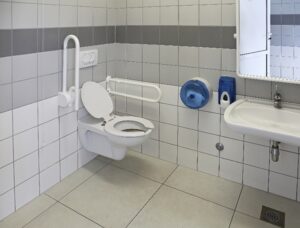
Hospitals have ideal conditions for drain flies to live, such as the lightly used areas where biofilm can build quietly. Floor drains collect mop water, organic matter, and body care residue to add to the buildup. In some of the most occupied areas, such as public restrooms near lobbies and waiting areas, the usage alone can cause a large amount of buildup under the drains and into the pipes. Public spaces like these can be hard to monitor and catch before it’s too late.
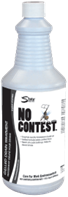
When you struggle with drain flies on top of the buildup and possible slow-drain issues, consider using No Contest™ in addition to a drain maintainer program. Adult drain flies are only the symptom of the problem, so targeting them with just a bug spray will only provide a short-term solution.
If drain flies continue to pester your facility without intervention, patients’ trust and satisfaction take a hit, and hygiene in your hospital is threatened. Getting ahead of the problem leads to a more stable, healthy perception from patients and employees of the environment.
Handling Lift Station Smells and Overflow
With perception and environment playing a huge role in comfort for patients, a lift station that is struggling to handle the accumulation of FOGs or waste can provide unpleasant smells that hinder the experience of everyone coming through.
Control Odors
Odors in lift stations usually stem from sewer gases (often including hydrogen sulfide) released when wastewater sits and turns septic. When wastewater sits, temperatures rise, or grease mats trap and concentrate gases, odors get worse.
In hospitals, any bad odor near entrances, loading docks, ambulance routes, or adjacent hallways can trigger complaints quickly. These odors can migrate and affect less-visited areas and linger, like corridors and basements.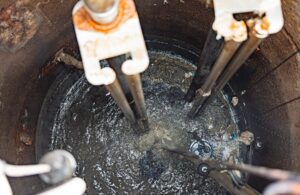
Odor control efforts work best when you address both the gas and the conditions creating it. A floating surface treatment can help suppress odors at the surface while also keeping grease from forming a stable mat that traps gases and feeds odor conditions. Orange Buoy™ is a strong ongoing option because it supports deodorizing while also providing floating degreasing action. If the need is primarily to cap odors (and degreasing is not the priority), Blanket 510™ can be used as a surface cap product.
Stabilize Performance
Overflow risk is usually not caused by a pump “going bad” overnight. Most of the time, the lift station starts showing warning signs first. You may see more alarms, pumps running longer, or pumps turning on and off too often.
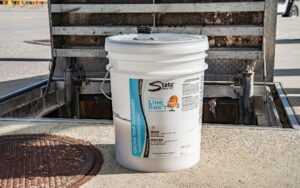
In hospitals, two common causes are wipes/rags and grease. Wipes can wrap around pump parts and block flow. Grease can build a thick layer that coats floats and sensors, which can cause false readings and missed pump cycles.
A preventative program focuses on keeping pumps and controls clean, so the station runs the same way every day. Line Bac’r™ contains 7 strains of bacteria, ready to help digest the FOGs showing up in your lift station. If there is already a thick grease cap, Grease-B-Gone® can be used as an initial treatment to break it down. After that, the goal is to keep the station on a regular maintenance plan.
Getting Ahead of the Problems
In any persistent problem, a short-term solution is only going to do so much. Being able to treat the source and maintain a clean environment can boost not just the sanitation of your facility, but also the experience of your patients and employees.
If you are interested in caring for your facility and want to learn more about enhancing your hospital maintenance, click here to learn more.
Get in Touch With Our Team
Have a question or need support? Our team is here to help. Fill out the form and we’ll connect you with the right expert to get you the answers you need.
For details on how we handle your information, visit our Privacy Policy.