









What is a Floating Lift Station Degreaser?
No one wants to constantly smell raw sewage emanating from their lift station—and no one wants to field complaints from building inhabitants about this issue. Of course, lift stations smell pungent by nature, but you can’t keep dealing with the stomach-turning stench of your workplace. So, what is a lift station degreaser and how can it help?
At State Chemical, we manufacture and distribute chemical solutions for various applications, including lift station maintenance. Odors can be tricky to solve, but with the right treatment, your lift station can be much more bearable.
To help you better understand these products and their applications, we will explain degreasers, their different types, when they should be used, and alternative treatment options. After reading, you’ll know whether lift station degreasers are the solution to your problem—and if they’re not, you’ll know which solution to explore instead.

What is a Floating Lift Station Degreaser?
A lift station degreaser is a liquid that floats on top of your lift station’s wet well. It caps off the top of the wet well, trapping odors inside and instead releasing a more pleasant scent.

Some lift station degreasers also stop sludge from sticking to the walls of your wet well, making these particular degreasers a preventative measure against crusty fat, oil, and grease (FOG) buildup.
The Different Types of Floating Lift Station Degreasers
When selecting a floating degreaser, you’ll have two options: odor-controlling degreasers or odor-controlling degreasers that also prevent FOG buildup.

A purely odor-controlling lift station degreaser is for times when you’re solely concerned about odors. As previously mentioned, this degreaser will seal odors inside your wet well while replacing them with a pleasant fragrance. When you have serious odors but no issues with buildup, this is an effective choice.
Meanwhile, if you’re experiencing pungent odors in addition to recurring buildup, certain degreasers can be an effective odor eliminator while simultaneously preventing future buildup. Although, it’s important to note that these degreasers will not eliminate already-existing buildup.
To verify which type of degreaser you’re purchasing, read product descriptions closely and contact the manufacturer with questions.
When Should You Use a Floating Lift Station Degreaser?
Now that you know what a floating degreaser is and the different types, it’s important to ensure that a degreaser is the type of product you need.

The time to use a degreaser is mainly if you’re experiencing severe odors tied back to your lift station. Lift station degreasers are, at their core, odor eliminators, so it makes the most sense to use them to control odor problems.
Further, degreasers are a good solution if you’d like to prevent recurring FOG buildup on your wet well walls and floats. You’ll just need to ensure that you’re getting the right degreaser for the job, but if preventing FOG buildup is a concern for you on top of odor problems, degreasers are a great choice.
Alternative Lift Station Treatments
If lift station degreasers don’t sound like the solution for your lift station, there are alternative solutions out there for you.

Your first option is to use a biological product. These products release “good” bacteria into your lift station, and the bacteria eat the FOG buildup in your lift station, digesting it into water and air. As long as conditions remain livable for the bacteria (meaning that there must be a food source, temperatures of at least 40° F and no more than 120° F, and a pH of 6–9), they continue clearing buildup in your lift station.
This is a good solution when you have moderate-to-severe FOG buildup in your lift station. The bacteria keep FOGs under control, reduce the frequency of lift station pump-outs, and can even improve lift station odors by taking out the source of the odor (i.e., FOGs).
Another option is to use an emulsifying chemical to reduce FOGs in your lift station. This clears buildup just as bacteria do—only chemically. With an emulsifier, FOG buildup is liquefied so it can pass easily through the pipes with the water.
A downside of emulsifiers is that they are illegal in many municipalities since they pose the risk of allowing FOGs to reform later down the drain line. This could lead to clogs in the sewer system. Plus, emulsifiers can wear down your lift station equipment if used too frequently, which means they cannot be used in lift stations that use any plastic equipment in the wet well.
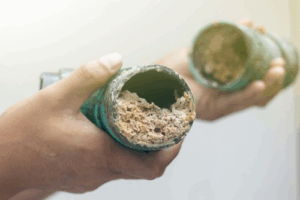
If desired, you can also use a manual method of FOG removal, such as skimming. This will require that you spend at least 30 minutes per week skimming the top of the lift station with a specialized tool to physically remove FOG buildup.
This can be effective and more economical if done regularly, but it is more labor-intensive and tedious than using chemical maintenance.
And, of course, you have a fourth option of not treating your lift station at all. Instead, you can rely on regular pump-outs to keep FOGs and odors under control. This will mean more severe odors, more buildup, and more frequent pump-outs, but if other methods aren’t in the cards for you, you never have to complete chemical lift station maintenance.
Learn How State Chemical’s Cherry Float Can Block Odors in Your Lift Station
A foul-smelling lift station is enough to turn anyone’s stomach, and degreasers can be an effective solution to this problem. Now that you know the purpose of lift station degreasers, watch the video below to learn how State Chemical’s Cherry Float can treat odors in your lift station because this article seems geared more toward in-building lift stations rather than collections system lift stations.
Get in Touch With Our Team
Have a question or need support? Our team is here to help. Fill out the form and we’ll connect you with the right expert to get you the answers you need.
For details on how we handle your information, visit our Privacy Policy.