








Liquid vs. Granular Commercial Drain Openers
When your facility is dealing with tough drain clogs, you want a solution that works fast and doesn’t create more problems. Commercial grade drain openers typically come in two forms: liquid and granular. Each performs differently depending on the type of clog and your plumbing setup.

In this article, we’ll cover:
- Two kinds of commercial drain-opening chemicals
- How to match the product to clog severity
- Common concerns with chemical drain openers
- Best-use scenarios and which option to choose
The Two Kinds of Commercial Drain-Opening Chemicals
Liquid Drain Openers
Liquid drain openers can be caustic or acidic. When you pour them down the drain, they melt clogs if they are acidic, and they generate heat if they are caustic.
Granular Drain Openers
Granular drain openers are almost always caustic, not acidic. When you pour the recommended dose down the drain, it will sink to the source of the clog and generate heat to dislodge the drain clog.
Clog Severity
Most Severe
For the most severe clogs, you will need an acidic drain opener, which is almost always liquid. A severe drain clog is one caused by paper or cotton, like if someone flushes a diaper.

Serious
For serious clogs that are slightly less intense, granular drain openers can be the best option. This can include thick blockages where water won’t drain at all. For oddly shaped drains or standing water surrounding drains, putting a granular drain opener down a funnel can help it easily reach a clog.
Moderate

A moderate clog will be caused by fats, oils, and greases (FOGs), hair, or other organics. It can be seen in slow drains or full blockages. It’s best to use a caustic drain opener rather than an acidic one. Because of this, either granular or liquid should work. However, you may have better luck with a granular option, as these typically have a more concentrated amount of sodium hydroxide, leading to a stronger initial reaction, generating more heat.
What Should I Treat My Clog With?
No matter how severe your clog is or which treatment you prefer, it’s important to understand which products are best for your situation.
Treating Minor Clogs
Your facility may struggle with buildup over time or only occasionally deal with clogged drains.

Sometimes the clogs are minor enough that you won’t need the most powerful liquid or granular option. Options like PrimeZyme™ and Grease-B-Gone® can be used against a minor drain issue. These products are also great for preventing future buildup and larger clogs.
More Severe Clogs
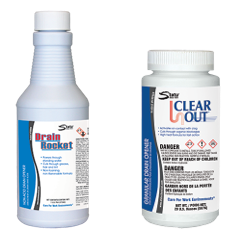
For your serious clogs, a liquid option like Drain Rocket™ or a granular option such as Clear Out™ should be your first course of action. While these products aren’t recommended for your most severe clogs, such as paper or cotton, they can easily take care of FOGs, sediment, or organics.
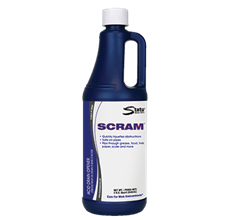
SCRAM® is the most powerful option offered by State. SCRAM® is a sulfuric acid liquid drain opener, designed to be activated by water. Once it enters the drain, it’s designed to sink and disintegrate the clog. SCRAM® is safe for use on copper, galvanized pipe, porcelain, and PVC when used as directed.
Common Concerns with Commercial Drain Openers
Safety

A common question is, “Which type is safer for me to use?” In reality, any powerful industrial drain opener can only be used safely with proper personal protective equipment (PPE). That said, there are some key differences in the safety considerations between granular and liquid drain openers.
Granular drain openers create a chemical reaction only once they reach the clog, whereas liquid drain openers may splash back upon contact. State Industrial’s granular drain openers are not activated until they become wet, meaning they pose less risk during handling prior to use.
However, these safety advantages apply only when the product is used correctly. If either product is handled without PPE and comes into contact with skin, it can cause serious harm.
Wear and Tear
Regardless of the drain opener you choose, the impact on your pipes will depend on the specific ingredients rather than the consistency of the product.
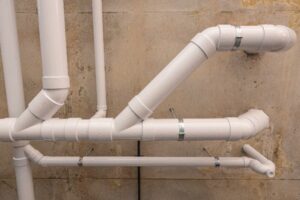
Granular drain openers should not negatively impact your pipes, but can sometimes crack porcelain due to their intense heat generation when the clog is not cleared quickly enough.

When it comes to liquid drain openers, similar to the granular options, it depends on the ingredients. If the product uses sulfuric acid, it could damage your pipes if they are older, rusted, or cast iron. However, if it’s caustic, the liquid drain opener shouldn’t cause you any problems if used according to the manufacturer’s instructions.
Making the Decision
Whether your primary drain issues point you toward a liquid or granular treatment, the number of available options can feel overwhelming. Choosing the right solution isn’t always easy, regardless of your specific situation.
Curious about what may be causing your drain problems and what it means for proper care? Watch below to learn more.
Get in Touch With Our Team
Have a question or need support? Our team is here to help. Fill out the form and we’ll connect you with the right expert to get you the answers you need.
For details on how we handle your information, visit our Privacy Policy.