




Facility Maintenance Checklist: When and Where to Apply Insecticides

As a facility manager, you know that regularly applying insecticides is the way to keep bugs out. But if done at the wrong times or in the wrong spots, insects might still slip through. As the person responsible, this can quickly become frustrating and overwhelming. This makes it of the utmost importance to understand where the best application zones are and when the best times to apply are.
At State Chemical, we manufacture and distribute biological and chemical solutions for various applications, including insect control. Helping your facility get rid of pesky insects can be tricky, but with the right approach, this is within reach.
To help you formulate your insect control approach, we will lay out common insect infestations along with when and where to apply insecticides to eliminate them. After reading, you’ll know how to curb insect problems and prevent future infestations.
When and Where to Apply Insecticides to Eliminate Crawling Insects
Crawling insects often include centipedes, millipedes, roaches, beetles, silverfish, spiders, earwigs, ladybugs, and mites. For these types of bugs, the most effective way to eliminate them is by targeting the places they’re most likely to enter from.

This means applying insecticides to crevices, openings, entryways, windows, and behind appliances. And you shouldn’t just do this inside; also applying your insecticides outside makes it so insects’ chances of even entering the building are slim.
Say that you have a ladybug problem in your building. Applying an insecticide inside around windows and doorways will be helpful, but if you aren’t also applying the insecticide in these same areas from the outside, you’re losing an extra layer of defense.
The outdoor layer of insecticide should take out most bugs before they enter. But if any slip through, the inside layer should take them out. This, of course, isn’t foolproof since there’s still the possibility you may miss a spot. But this is the best way to ensure your building is bug-free.
For crawling insects, it’s usually best to apply insecticides in the spring and summer to prevent infestations. Additionally, it is more effective to apply it in the early morning and late evening when bugs are less active.
When and Where to Apply Insecticides to Eliminate Ants and Termites
With ants and termites, you’ll also want to apply insecticides to crevices, openings, entryways, windows, and behind appliances. However, when possible, it’s best to try to target nests and trails.
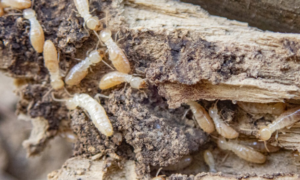
The thing about ants and termites is that they move in groups. Targeting entry points is vital, but until the ants’ source is treated, you may not yield completely successful results. If you can, find where the ants and/or termites seem to be coming from, and treat that as your main target.
Once you have this source in mind, you can treat the area strategically based on this information. Plus, you can preventatively treat entry points to avoid future problems.
As with crawling insects, you should apply insecticides for ants and termites both indoors and outdoors for the most comprehensive protection. Since ants and termites are most active in these seasons, it’s best to apply insecticides targeted toward these pests in spring and summer. Following these steps will yield the most effective results.
When and Where to Apply Insecticides to Eliminate Flying Insects
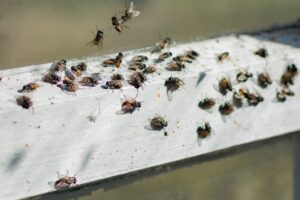
Flying insects may include flies, gnats, mosquitoes, crickets, cicadas, mayflies, and grasshoppers. For these insects (particularly with flies), it’s a good practice to apply insecticides to entryways, crevices, windows, trash areas, exterior walls, and breeding areas.
These treatments are usually most important in the spring and fall, where flies and flying insects are most prevalent. And as with the previous groups, indoor and outdoor treatment is essential to keep them under control.
It’s also important to keep up with general sanitation to prevent infestations of insects like flies.
Insecticides make a big difference, but if you aren’t cleaning out the rotting trash or replacing the broken screen that draws in flies in the first place, insecticides can only do so much. Maintaining sanitation standards is vital to get to the root of the issue. Bugs like to gather around organics, so if things aren’t consistently clean, they’re more likely to coalesce.
Focus on general facility maintenance as well as insect control, and your insect elimination efforts will be more effective for it.
When and Where to Apply Insecticides to Eliminate Bees, Wasps, and Hornets
Bees, wasps, and hornets can elicit significant fear and unease in your facility. To prevent and eliminate stragglers, you’ll want to apply insecticides to entryways, windows, doors, cracks, and crevices. But if you’re able to trace them, it’s most effective to target nests and hives.
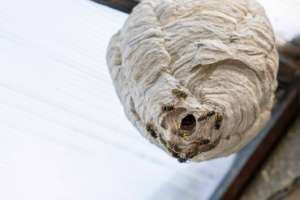
Treating openings like windows can kill lone bees and stop infestations from starting, but if you already have a hive or nest, insecticides around openings won’t solve the issue. Instead, you need to target the hive or nest itself with a blast spray.
This is best done in the early morning or evening when the insects are less active—and you’ll also want to keep a safe distance and possibly wear protective equipment to avoid stings. Once you’ve taken safety measures, you can spray the hive with your insecticide and kill off all pests. Later on, you can remove the empty hive.
If you want to avoid wasp, hornet, and bee infestations, treating areas like entryways is the best preventative measure. But if you can trace a specific nest or hive, treating the problem at the source is always the most effective.
Optimize Effectiveness for Your Commercial Insecticides
Following these guidelines will help you to control insects in your facility, but for optimal effectiveness, just spraying a chemical won’t necessarily cut it. To most comprehensively eliminate insects in your facility, also consider the following:
Keep a Maintenance Schedule and Record-Keep

Insect control is a good idea, but not so much if you forget to keep up with it. For organizational purposes, keeping a consistent maintenance schedule and recording this maintenance can be beneficial.
This can mean using a calendar with detailed information on what needs to be completed when. After applying an insecticide, it’s important to log the date, areas treated, and products used. This will help you to keep track of what areas need treatment and will ultimately lend a hand in keeping your facility bug-free.
Implement an Integrated Pest Management Approach

As discussed in the “flying insects” section, just using a chemical product isn’t a total fix—you should also be looking at other measures you can put into place to keep bugs out.
This means cleaning the floors, wiping down surfaces, sanitizing equipment, sealing entry points, regularly taking out the trash, and generally practicing good sanitation standards. These measures will make it less likely for bugs to get in—or to have a food source to survive on. Plus, your facility will present itself as cleaner and more welcoming.
Regularly Evaluate Insecticide Effectiveness
It’s also important to consistently evaluate the results of your insecticide(s). If you’ve been regularly using one insecticide and are still noticing bugs around your facility, it’s probably time to explore other products (note: make sure you follow the directions on the label to determine which bug types a particular product kills—and keep in mind that you may require multiple products to curb your problem). Meanwhile, if you start using a new insecticide and notice fewer bugs in your facility, you’ve probably landed on the right product for you.
If your products aren’t working for you, there are other options that may help. It never hurts to explore if you’re not happy with the results you’re currently getting.
Choose the Right Insecticide for Indoor and Outdoor Use
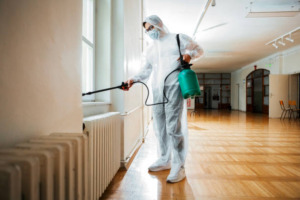
Another consideration is whether you’re using insecticides indoors, outdoors, or both. For any of these applications, you’ll want to ensure you’re only using insecticides intended to be used indoors, indoors, and only using insecticides intended to be used outdoors, outdoors.
Using an outdoor insecticide indoors could be a safety hazard, and using an indoor one outdoors could prove ineffective. It’s important to have different products for different application zones for optimal effectiveness.
Consider Seasonal Adjustments

Depending on your industry, you may or may not have to worry about seasonal adjustments. For example, in a restaurant, you’ll always need to practice regular ins
ect control in order to maintain hygiene standards. But in an apartment complex, you may only face insect problems in certain parts of the year.
If seasonal changes or inclement weather affect your region and industry, you’ll need to change your insect control approach accordingly. For example, insecticides are less effective and possibly even environmentally harmful in the rain, so you’ll want to apply them when clear skies are in the forecast. Similarly, if you only see bug problems in the summer, there’s no point applying insecticides year-round.
Be careful when reading product descriptions to ensure your environmental conditions are compatible with the product. From there, use insecticides when seasonally appropriate, and your approach will be more efficient.
Learn How to Choose the Best Commercial Insecticide for Your Facility
Bugs are a frustrating, uncomfortable presence, but when insecticides are applied thoughtfully in the right places, this will no longer be a concern. Now that you know how to approach insect control in your facility, read this article to learn how to choose the right commercial insecticide for you.
Get in Touch With Our Team
Have a question or need support? Our team is here to help. Fill out the form and we’ll connect you with the right expert to get you the answers you need.
For details on how we handle your information, visit our Privacy Policy.