



Commercial Non-Selective Herbicide vs. Selective Herbicide
Pesky weeds are the prickly, irritating enemy of any property manager. To maintain your grounds, the obvious choice is to turn to a weed killer. And finding the right one is critical to ensure your issue doesn’t persist and your desired plant life is safe. This being said, should you use a selective or non-selective herbicide?
At State Chemical, we manufacture and distribute biological and chemical solutions for various applications, including weed control. When it comes to your property’s image, the surrounding vegetation plays an important role, making it important that your issue is dealt with effectively.
To help you determine the best industrial herbicide for you, we will explain non-selective weed killers, selective weed killers, and when each should be used. After reading, you’ll know the best herbicide for your property’s weed problem.
What is a Commercial Non-Selective Herbicide?
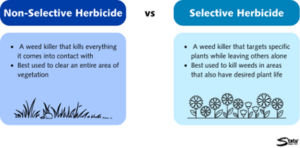
A non-selective herbicide is a weed killer that kills everything it comes into contact with. It will not differentiate between grass, dandelions, flowers, trees, or otherwise. If it encounters a plant, it kills the plant.
Non-selective herbicides are a way to eliminate the plant life from an area completely. Their formula is toxic to all plant life and does not discriminate with what it takes out.
What is a Commercial Selective Herbicide?

On the other hand, a selective herbicide is a weed killer that only targets specific plants while leaving others alone. This means it might kill clover, for example, but it won’t affect grass.
Selective herbicides are a way to remove unwanted plants without affecting desired plants nearby. This is because they use ingredients that are toxic to some plants, targeting their specific characteristics, but safe for others.
How do Selective and Non-Selective Herbicides Work?
Non-selective herbicides work by disrupting important processes that all plants need to survive, such as photosynthesis or protein production. Because every plant relies on these processes, the herbicide will kill almost any plant it touches.
Selective herbicides work differently. They are designed to target traits that only certain plants have. This allows them to kill specific weeds while leaving grass or other desirable plants unharmed.
When to Use a Commercial Non-Selective Herbicide
You should use a non-selective herbicide if your goal is to completely clear the plant life from an area. If you don’t, you may become frustrated by the additional treatment that will later be required.
Let’s say that your goal is to curb weed growth on a walking path through your property. Currently, this area is full of various weeds and grasses. Since you don’t want plant life to be in this area at all, using a non-selective weed killer would be a quick way to kill off the plants and keep the area clear.
However, also be cautious about using non-selective weed killers in areas where you want to maintain certain plant life.
Imagine that you have a recurring chickweed problem. The chickweed often embeds itself in your grass, and it feels like nothing gets rid of it, so you use a non-selective herbicide. This will eliminate the chickweed, but it will also leave significant bald spots in your lawn spanning as wide as the weeds originally did. In this case, it would be far preferable to use a selective herbicide.
Non-selective herbicides are an effective choice when you need to fully clear out an area—but if you’re looking to remove only weeds and maintain other plants, it’s better to use a selective herbicide.
When to Use a Commercial Selective Herbicide
This said, it’s important to use a selective herbicide if you’re treating an area that also contains desired plants. Otherwise, you could be negatively affecting your property.
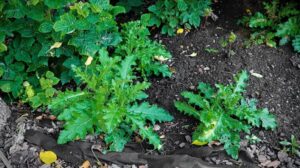
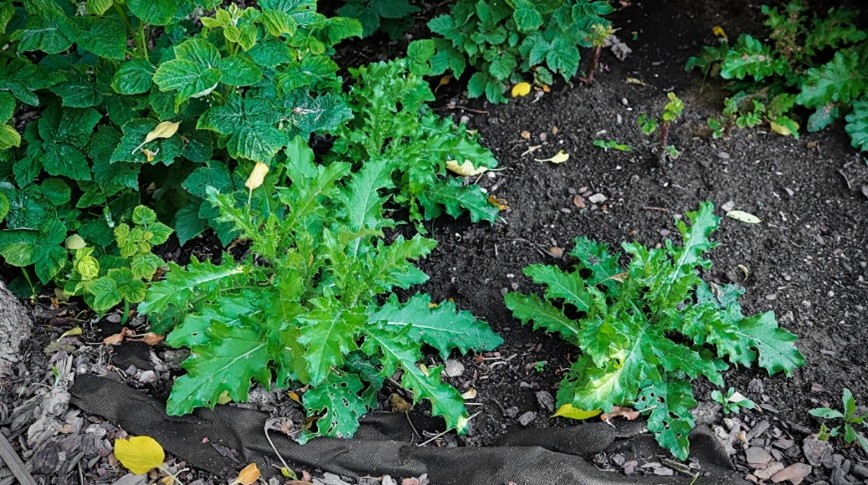
Suppose you have a small garden on your property that keeps getting invaded by creeping thistle. You don’t want to damage your flowers, so a selective herbicide would be the better choice. It can target the thistle while leaving your other plants unharmed.
If you used a non-selective herbicide instead, you could end up with a barren garden.
On the other hand, selective herbicides are not ideal when you want to completely clear an area. For example, if you want to remove all vegetation around a shed, a selective product may eliminate weeds but still allow grass or other plants to grow back.
Before purchasing, make sure the selective herbicide you choose targets the specific weeds you’re trying to control.
Learn About State Chemical’s Industrial Non-Selective Weed Killers
Weeds are a frustrating presence on any property, but with the right herbicide, the problem can be solved. Now that you know whether selective or non-selective weed killers are right for you, watch the video below to learn about State Chemical’s non-selective herbicides.
Get in Touch With Our Team
Have a question or need support? Our team is here to help. Fill out the form and we’ll connect you with the right expert to get you the answers you need.
For details on how we handle your information, visit our Privacy Policy.