









A Business Guide to Selecting the Right Commercial Weed Killer
Picture this: your property is overrun with prickly thistles, clumps of crabgrass, and splotches of clover as far as the eye can see. This happens every summer, and as the issue emerges yet again, you sigh, bracing yourself for another annoying season of back aches and sunburn—after all, you’ll be doing a lot of weeding. Unless you find the right weed killer, that is.
But finding an effective weed killer is easier said than done, especially as it’s not always clear what you need or what will best target your problem. Do you need to clear out certain weeds or everything in the area? Should you be looking for a pre-emergent measure or a post-emergent solution? Is the goal to reapply as needed or to complete as few treatments as possible?
At State Chemical, we manufacture and distribute chemical and biological solutions for various applications, including weed control. It can be tricky to take out a persistent weed problem, but it is possible to find the best solution for you.
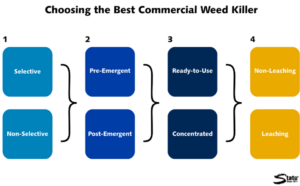
To help you determine the best weed killer for your problem, we will explain selective, non-selective, pre-emergent, post-emergent, ready-to-use, and concentrated weed killers—plus when you should use each. After reading, you’ll know what the right herbicide looks like for your property and will be equipped to tackle your commercial weed problem.
Common Weed Problems on Commercial Properties
Commercial facilities tend to deal with persistent weed issues. These include crabgrass in turf areas, clover patches in lawns, and weeds growing through sidewalks or parking lots. Broadleaf weeds can appear and disrupt landscaping beds, and vegetation can build up around fences or building foundations.

Depending on the problem, different weeds will require different solutions. For example, seasonal weed outbreaks may require pre-emergent control. Cracks in your sidewalks or parking lots may need non-selective herbicides. Broadleaf weeds in grass will likely need a selective herbicide.
Understanding your weed problem will help determine which type of commercial herbicide works best.
When to Use Selective vs. Non-Selective Commercial Weed Killers
The first question to consider is which plants you want your weed killer to kill. Are you aiming to only eliminate weeds like dandelions but maintain plants like grass? If you answered yes, you’ll want to use a selective weed killer.
Selective weed killers are herbicides that only target certain weeds. This means they can control weeds in grass or flower beds, for example, without harming your desired plant life.
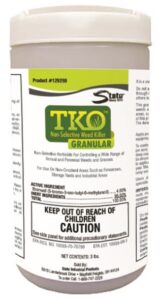
When choosing a selective weed killer, it’s important to ensure you select one specifically intended to kill your problem weed (e.g., if you want to eliminate clover patches in your lawn, be sure to choose an herbicide that claims to eliminate clover). If your selective weed killer matches this criterion, it’s the right option for you.
On the other hand, if you want your weed killer to kill all the plants in an area, you should use a non-selective weed killer.
Non-selective weed killers do not discriminate between plant life—they kill everything they are applied to, including grass. These types of herbicides are best used to clear the area around structures, to keep plants off walking paths, or for other similar applications.
If you’re treating an area that includes desired plant life, do not use a non-selective weed killer. But if you’re aiming to completely eradicate the area of plants, a non-selective weed killer is the best solution for you.
When to Use Pre-Emergent vs. Post-Emergent Commercial Weed Killers
Your next step is determining at what stage you want to kill weeds. If your goal is to stop weeds from ever sprouting, you should explore pre-emergent herbicides.
Pre-emergent weed killers should be applied before the weed problem exists, usually in early spring for summer annuals and late summer or early fall for winter annuals. From there, they create a barrier in the soil to stop weeds from germinating.
That said, pre-emergent weed killers will not kill existing weeds, and they may not completely curb all weed growth. Consider, for example, weed seeds blowing in from a neighbor’s property—a pre-emergent in the soil cannot stop the growth of a seed that lands in your lawn months later.
For this reason, while pre-emergent herbicides can prevent major problems, you’ll usually also want to have a post-emergent option on hand for later spot treatment.
Post-emergent herbicides are weed killers used after the weed problem has already started. You might use these more frequently in the summertime as you notice clover patches popping up, for example.
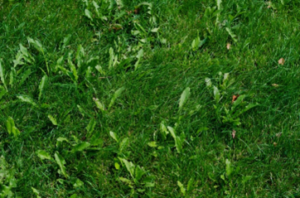
If you prefer to treat the problem as it arises, use a post-emergent weed killer. This will enable you to kill weeds as they pop up.
Post-emergent weed killers can also go hand-in-hand with pre-emergent herbicides for the most comprehensive treatment. This way, you can prevent weeds from sprouting while also spot-treating any that still appear. Using both is the best way to ensure that weeds are kept under control.
When to Use Ready-to-Use vs. Concentrated Commercial Weed Killers
Next, it’s time to determine whether you’d prefer a ready-to-use weed killer or a concentrated one.
Ready-to-use herbicides come pre-mixed, meaning you can apply them to problem areas just as they are. This lowers safety risks and reduces the required labor time, but it also means that you’re paying for a watered-down product and don’t have the option to dilute it to your preferences.

Meanwhile, concentrated weed killers are not pre-diluted and will need to be mixed with water. This means that you can choose your desired dilution rate (e.g., you can use a higher volume of water to save money and product or a lower volume of water to work more effectively) and usually save money by paying only for the active ingredient.
However, herbicides are regulated by the EPA, and they only allow certain dilutions. To determine suitable dilution rates, you’ll need to consult the product label. Additionally, it can pose safety risks to manually dilute herbicide, and labor will take longer if you must complete this step before applying.
Both options have pros and cons, and no choice is the right choice. Just consider what you value in your herbicide and make the decision from there.
Choosing the Best Commercial Weed Killer for Your Property
Finding the most effective weed killer for your property involves considering many different factors. Now that you know which categories of herbicide will work best for you, watch the video below to learn about State Chemical’s commercial weed killer options.
Get in Touch With Our Team
Have a question or need support? Our team is here to help. Fill out the form and we’ll connect you with the right expert to get you the answers you need.
For details on how we handle your information, visit our Privacy Policy.